

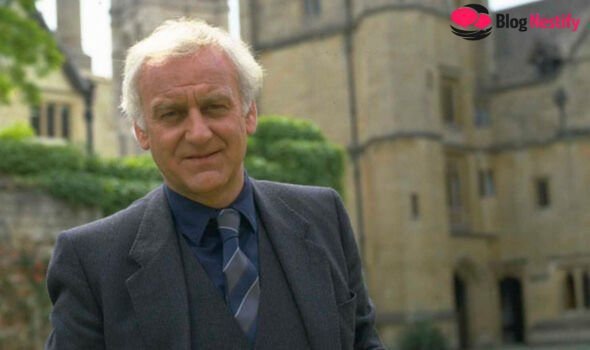
John Thaw remains one of the most respected names in British television. Long after his passing, viewers still remember his voice, his presence, and the quiet power he brought to every role. For many fans, John Thaw was not just an actor on screen. He was part of their living room, their weekly routine, and their memories of some of Britain’s finest television dramas.
His popularity did not come from glamour or noise. It came from something deeper. He had a rare ability to make fictional characters feel completely real. Whether he was playing the tough Jack Regan in The Sweeney, the thoughtful and difficult Inspector Morse, or the gentle Tom Oakley in Goodnight Mister Tom, Thaw gave every role weight, honesty, and emotional truth.
That is why his work continues to reach different generations. Older viewers remember watching him when his shows first aired. Younger audiences discover him through repeats, streaming, family recommendations, and the continuing popularity of British crime drama.
BIO
| Label | Information |
|---|---|
| Full Name | John Edward Thaw |
| Known As | John Thaw |
| Birth Date | 3 January 1942 |
| Birthplace | Manchester, England |
| Nationality | British |
| Profession | Actor |
| Famous Role | Inspector Morse |
| Other Popular Show | The Sweeney |
| Spouse | Sheila Hancock |
| Children | Three Daughters |
| Acting Career | 1960s to 2002 |
| Awards | Multiple BAFTA Awards |
| Death | 21 February 2002 |
Who Was John Thaw?
John Edward Thaw was born on 3 January 1942 in Manchester, England. He grew up in a working-class family and faced emotional challenges early in life, including the separation from his mother when he was young. These experiences are often seen as part of what shaped the seriousness and emotional depth he later brought to his acting.
Thaw trained at the Royal Academy of Dramatic Art, better known as RADA, one of Britain’s most respected drama schools. He was still very young when he entered professional acting, but his talent was noticed quickly. His early career included theatre, television, and film, giving him the foundation to become one of the most versatile actors of his generation.
What made him stand out was not a polished celebrity image. It was his natural authority. He looked and sounded believable. He could play hard men, wounded men, intelligent men, and lonely men without making them feel exaggerated. That honesty became one of the main reasons audiences trusted him.
His Early Rise
Before John Thaw became a household name, he spent years building his career through stage and television work. One of his early television successes was Redcap, where he played Sergeant John Mann. This role helped show his strength in playing disciplined, serious characters.
During the 1960s and early 1970s, British television was changing. Viewers were becoming more interested in realistic drama, sharper dialogue, and characters who felt closer to ordinary life. Thaw fitted this style perfectly. He did not seem distant or overly theatrical. He carried the attitude of someone who had lived, struggled, and understood people.
That quality helped him move naturally into crime drama, where he would make his first truly major impact.
The Power of The Sweeney

For many viewers, John Thaw first became unforgettable as Detective Inspector Jack Regan in The Sweeney. The series aired in the 1970s and changed the feel of British police drama. It was tougher, faster, and more direct than many earlier shows.
Jack Regan was not a soft or polished detective. He was aggressive, streetwise, impatient, and sometimes flawed. In the hands of a lesser actor, the character could have become one-dimensional. Thaw made him human. He showed the anger, pressure, loyalty, and exhaustion behind the tough exterior.
This role made Thaw a major television star. According to the BFI, he became widely remembered for two defining police roles: the tough Jack Regan and the introspective Endeavour Morse. That contrast shows his range as an actor.
The Sweeney appealed to audiences because it felt raw and immediate. Thaw’s performance was central to that. He gave the show its pulse. Viewers believed him because he never seemed to be acting for attention. He simply lived inside the part.
The Genius of Inspector Morse
If The Sweeney made John Thaw famous, Inspector Morse made him timeless. His role as Detective Chief Inspector Endeavour Morse became one of the most loved performances in British television history.
Morse was very different from Jack Regan. He was educated, cultured, difficult, lonely, and emotionally guarded. He loved classical music, real ale, crosswords, and Oxford’s intellectual atmosphere. He could be arrogant and impatient, yet he was also sensitive and deeply human.
Thaw understood this complexity. He did not play Morse as a simple genius detective. He gave him sadness, wit, frustration, and vulnerability. That is why audiences stayed with the character for so many years.
Inspector Morse became one of Britain’s most popular television dramas. At its peak, it drew huge audiences, and Thaw won major recognition for his performance, including BAFTA awards for playing Morse.
The relationship between Morse and Sergeant Lewis, played by Kevin Whately, also helped the show connect with viewers. Morse was sharp and difficult, while Lewis was warmer and more grounded. Their partnership gave the series emotional balance.
Why Morse Still Works
The reason Morse still appeals to new viewers is simple: the character feels real. He is brilliant but imperfect. He solves crimes, but he does not always understand his own heart. He notices details in murder cases but often misses chances for happiness in his personal life.
That emotional contradiction made him memorable. Many detective characters are written as clever machines. Morse was not. He was intelligent, proud, lonely, cultured, and often disappointed by life. Thaw played those qualities with restraint, which made them more powerful.
The Oxford setting also gave the series a timeless beauty. The music, architecture, writing, and slower pace helped the show age well. But the heart of it was always John Thaw. Without his performance, Morse would not have carried the same emotional force.
A Style Built on Truth
One of the strongest reasons John Thaw stayed popular across generations was his acting style. He never seemed desperate to impress. He did not overplay emotions or fill every scene with dramatic gestures. Instead, he trusted stillness, silence, and small expressions.
This made his performances feel mature and believable. A look from Thaw could say more than a long speech. His characters often carried pain beneath the surface, and he had a gift for letting the audience feel that pain without spelling it out.
He also had a distinctive voice. It was firm, controlled, and instantly recognizable. Whether he was delivering a sharp line as Regan or a thoughtful comment as Morse, his voice gave the words weight.
Good actors can make audiences watch. Great actors make audiences believe. John Thaw belonged to the second group.
More Than Crime Drama
Although many people remember him mainly for The Sweeney and Inspector Morse, John Thaw’s career was much wider. He worked in theatre, film, comedy, and serious drama. This range helped him avoid being trapped in one type of role.
In Kavanagh QC, he played James Kavanagh, a barrister dealing with legal cases and personal struggles. The role again showed his ability to portray intelligence, authority, and emotional pressure. It appealed to viewers who admired thoughtful drama rather than fast action.
He also appeared in Goodnight Mister Tom, a moving television adaptation of Michelle Magorian’s novel. In that role, Thaw played Tom Oakley, a lonely widower who takes in an evacuated boy during the Second World War. It was one of his most tender performances and introduced him to family audiences in a different way.
This ability to reach crime fans, drama fans, and family viewers helped explain his cross-generational appeal. He was not popular for one role alone. He built a body of work that touched different people for different reasons.
Goodnight Mister Tom
Goodnight Mister Tom deserves special attention because it showed a softer side of John Thaw. Viewers who knew him as Regan or Morse saw something different: warmth, patience, grief, and quiet kindness.
Tom Oakley is a man who has suffered loss and closed himself off from the world. Through his bond with a vulnerable child, he slowly learns to open his heart again. Thaw’s performance was gentle and deeply moving. He did not make the character sentimental. He made him believable.
This role mattered because it showed how much emotional range Thaw had. He could command a police drama, carry a detective mystery, and still break hearts in a family wartime story. That kind of range is rare.
His Personal Life
John Thaw’s personal life also shaped the public’s affection for him. He was married to actress Sheila Hancock from 1973 until his death in 2002. Their marriage became one of the best-known partnerships in British acting circles.
He had three daughters, including actress Abigail Thaw. His family connections to acting continued after his death, and Abigail later appeared in Endeavour, the prequel series connected to the Morse universe.
Thaw was known as a private man. He did not build his fame on constant public exposure. This privacy may have helped preserve the dignity of his image. Fans admired him for his work first, not for celebrity headlines.
Health and Final Years
John Thaw was diagnosed with oesophageal cancer in 2001. He died on 21 February 2002 at the age of 60. His death was widely mourned by fans, colleagues, and the wider British television community.
The sadness around his passing showed how deeply he had entered people’s lives. He was not seen as just another actor. For many viewers, he represented decades of strong British television. His death felt personal to people who had watched him grow from Jack Regan to Inspector Morse and beyond.
Even after his passing, his work did not fade. In fact, his reputation grew stronger as new generations discovered his performances.
Awards and Respect
John Thaw received major recognition during his career. He won BAFTA awards for his performance as Morse and was awarded the BAFTA Fellowship in 2001, one of the British Academy’s highest honors.
Awards are not the only measure of an actor’s value, but in Thaw’s case, they reflected something real. Critics respected him, audiences loved him, and fellow actors admired him. That combination is not easy to achieve.
His success came from consistency. He was not remembered for one lucky role or one popular series. He delivered strong performances across decades, and that made him part of British television history.
Why Generations Loved Him
The most important reason John Thaw remained popular across generations is that his characters aged well. Some television performances feel tied to one period. Thaw’s best work still feels alive because it is built on human emotion.
Jack Regan represents toughness, pressure, and moral conflict. Morse represents intelligence, loneliness, and regret. Tom Oakley represents grief, healing, and kindness. These are not dated themes. They are part of human life.
Different generations may discover Thaw in different ways, but they often respond to the same qualities: honesty, depth, strength, and vulnerability. He made viewers care about complicated men.
His Lasting Legacy
John Thaw’s legacy is especially strong in British crime drama. Many later detective shows owe something to the path shaped by The Sweeney and Inspector Morse. Tough police drama and thoughtful detective storytelling both found one of their finest performers in him.
The continuing success of Morse-related shows, including Lewis and Endeavour, also keeps his influence alive. Even when Thaw is not on screen, the world he helped define still matters to viewers.
His legacy is not only about popularity. It is about quality. He showed that television acting could be subtle, intelligent, and emotionally rich. He proved that a character does not need to be perfect to be loved. Sometimes flaws make a character more human.
Final Thoughts
So, what made John Thaw so popular across generations? It was his honesty. It was his emotional depth. It was his ability to play strength and sadness at the same time. He gave audiences characters who felt real, flawed, intelligent, and deeply human.
From Jack Regan to Inspector Morse, from James Kavanagh to Tom Oakley, Thaw created roles that stayed with people. He was not just a star of his time. He became part of British television memory.
His work continues because it still speaks to viewers. Older fans return to it with affection, and younger viewers discover why he mattered so much. That is the mark of a truly lasting actor.
John Thaw’s popularity was never built on noise. It was built on craft, truth, and quiet power. And that is why, even today, his name still carries respect.
Frequently Asked Questions
What was John Thaw most famous for?
John Thaw was best known for playing Inspector Morse in the long-running British crime drama Inspector Morse. He also gained fame through The Sweeney.
Was John Thaw married?
Yes, John Thaw was married to actress Sheila Hancock. They remained together until his death in 2002.
What caused John Thaw’s death?
John Thaw died from oesophageal cancer in February 2002 at the age of 60. His passing deeply affected fans across Britain.
Why is John Thaw still popular today?
John Thaw remains popular because of his realistic acting, emotional performances, and timeless television roles that still connect with viewers.
What are John Thaw’s best TV shows?
Some of John Thaw’s most loved shows include Inspector Morse, The Sweeney, Kavanagh QC, and Goodnight Mister Tom.
