

Introduction
Farringdon is one of those London areas that many visitors pass through without truly noticing. They may arrive at the station, change trains, grab a quick coffee, and move on toward bigger names like Covent Garden, Soho, or St Paul’s. But those who slow down will find a neighborhood full of character, history, food, hidden lanes, old pubs, and quiet corners that feel deeply local.
Farringdon is not polished in the same way as London’s most famous tourist districts. That is exactly what makes it special. It has medieval roots, working-market energy, creative offices, independent restaurants, and streets where old London still feels close. For travelers who enjoy places with stories, Farringdon offers a more authentic side of the city.
| Label | Information |
|---|---|
| Location | Central London, England |
| Area Type | Historic urban neighborhood |
| Known For | Hidden streets and local culture |
| Main Attraction | Smithfield Market |
| Historic Landmark | St John’s Gate |
| Popular Food Spot | Exmouth Market |
| Best Experience | Walking and exploring |
| Atmosphere | Quiet, creative, and historic |
| Famous Architecture | Victorian and medieval buildings |
| Ideal For | Food lovers and history fans |
| Transport Access | Underground and Elizabeth line |
| Best Visit Time | Morning and early evening |
| Travel Style | Local and less touristy |
Where Farringdon Is
Farringdon sits in central London, close to Clerkenwell, Smithfield, Holborn, and the City of London. Its location makes it easy to reach, but it still feels less crowded than many nearby areas. The station connects visitors through the London Underground, Thameslink, and the Elizabeth line, making it a useful starting point for exploring both old and modern London.
The best way to enjoy Farringdon is on foot. The area is compact, and many of its most interesting places are found by walking slowly through side streets, alleys, market lanes, and old squares. Unlike tourist-heavy neighborhoods, Farringdon rewards curiosity.
Why Farringdon Feels Different
Farringdon has a layered personality. One moment you may be standing outside a historic gate linked to medieval knights, and a few streets later you are near a stylish restaurant, a design studio, or a quiet coffee shop. This mix gives the area a lived-in charm.
Many tourists miss Farringdon because it does not announce itself loudly. There are no giant attractions shouting for attention. Instead, its appeal is hidden in details: old brick buildings, narrow streets, historic pubs, market architecture, and local food spots that feel more natural than staged.
St John’s Gate
One of the most fascinating places near Farringdon is St John’s Gate. At first glance, it may look like a beautiful old stone gateway, but it carries centuries of history. It was built in the early 1500s as part of the Priory of the Knights of St John, also known as the Knights Hospitaller.
Today, the gate is connected with the Museum of the Order of St John. This museum tells the long story of the Order, from its early religious and medical roots to its modern link with St John Ambulance. For visitors who enjoy hidden history, this is one of the strongest stops in the area.
What makes St John’s Gate special is its quiet presence. It does not feel like a crowded landmark. You can stand nearby, look at the stonework, and imagine how different this part of London once was. It is a perfect example of how Farringdon hides major history in plain sight.
Clerkenwell Green
A short walk from Farringdon takes you to Clerkenwell Green, a place with a strong political and social past. Despite its name, it is not a green park today, but a historic open space surrounded by buildings with character.
Clerkenwell Green has long been linked with public debate, reform, radical thought, and working-class history. It was once a meeting point for speakers, campaigners, and local residents. Today, it is calmer, but the area still carries that thoughtful, independent spirit.
For tourists, Clerkenwell Green is worth visiting because it feels different from the postcard version of London. It has depth. It tells a story of ordinary people, ideas, work, and change. Sit nearby for a moment, and you can feel how the area connects past and present.
Smithfield Market
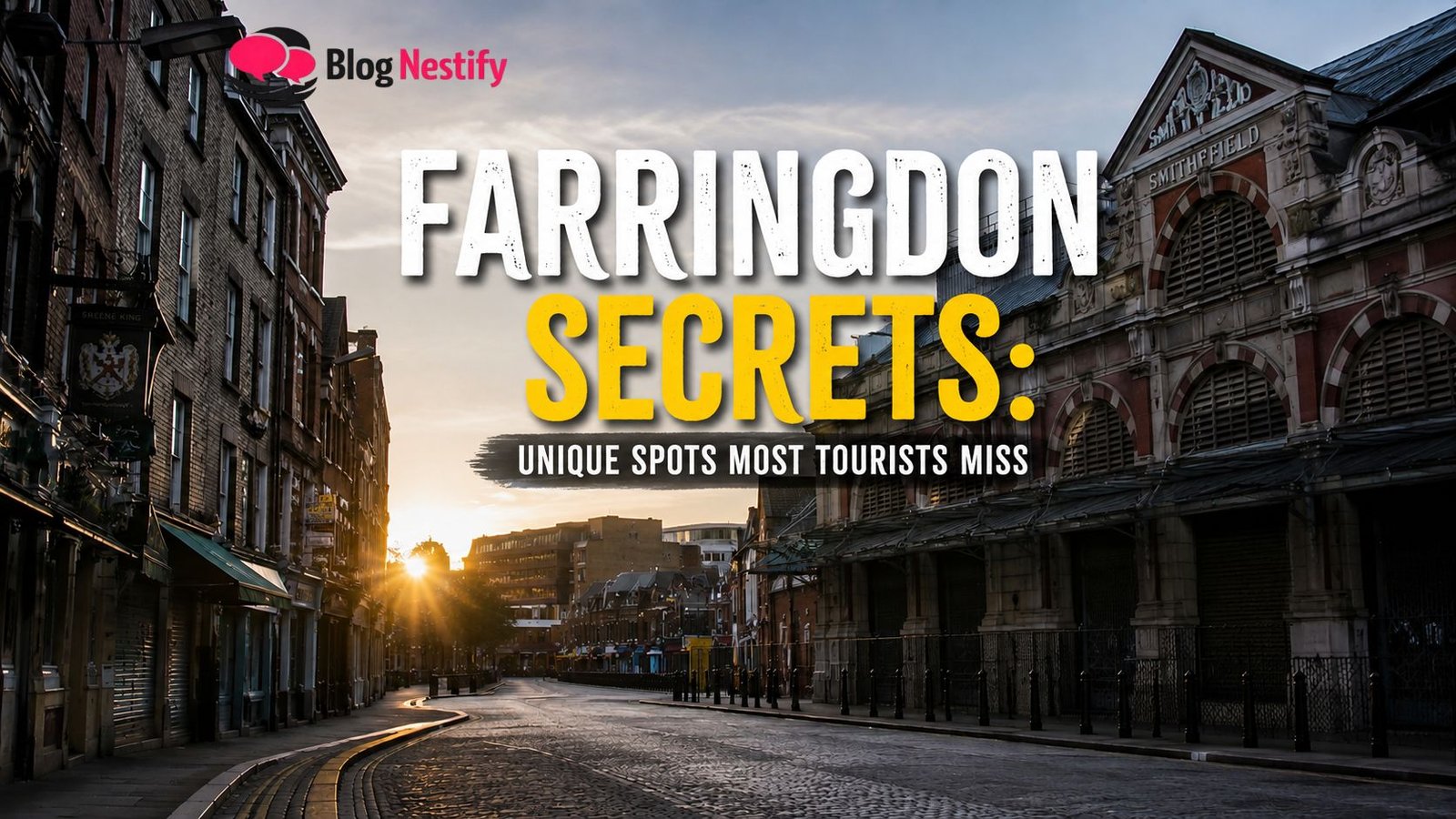
No guide to Farringdon is complete without Smithfield Market. This historic meat market has shaped the area for centuries. The market’s story goes back to medieval London, and its Victorian buildings remain among the most striking sights near Farringdon.
Smithfield is especially interesting early in the morning. While most tourists are still asleep, the area has a completely different rhythm. Traders, deliveries, market workers, and quiet streets create a side of London that feels real and unfiltered.
Even if you do not enter the market, walking around the outside is worthwhile. The architecture is bold, historic, and full of atmosphere. Smithfield also shows how Farringdon has always been connected to trade, food, and the working life of the city.
Exmouth Market
Exmouth Market is one of the most enjoyable streets near Farringdon, especially for food lovers. It is a semi-pedestrianized street filled with cafés, restaurants, independent shops, and market stalls. The mood is relaxed, local, and stylish without feeling too formal.
This is a great place for lunch, coffee, or a slow afternoon walk. Unlike some famous London food areas, Exmouth Market still feels like a neighborhood street. Office workers, residents, students, and visitors mix naturally, giving it a friendly energy.
For a blog reader planning a visit, Exmouth Market is one of the easiest hidden gems to enjoy. It is not difficult to find, but many first-time London tourists never make it here. That makes it a useful stop for anyone who wants to see Farringdon beyond the station.
The Viaduct Tavern
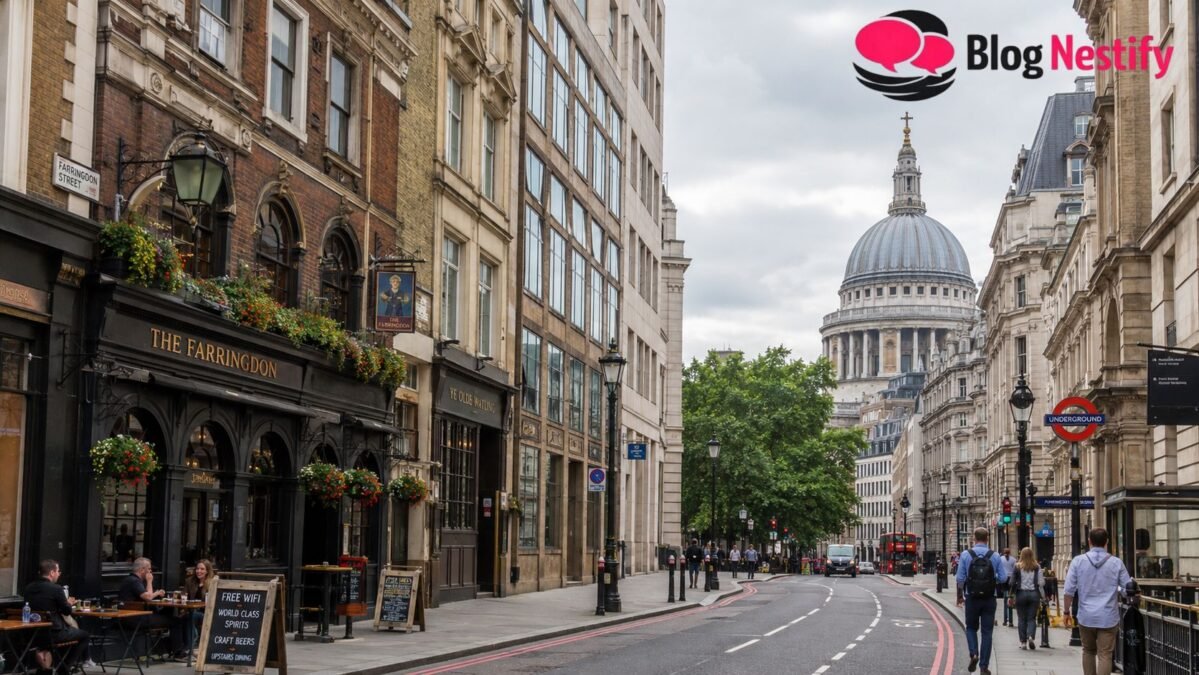
Farringdon is also known for historic pubs, and The Viaduct Tavern is one of the most memorable. It sits near Holborn Viaduct and is often admired for its Victorian style, traditional interior, and old London atmosphere.
The pub has a reputation for stories and legends, including tales connected with its cellar and past uses of the building. Whether visitors believe the ghost stories or not, the place has the kind of mood that makes London pubs so appealing.
A stop here is not only about having a drink. It is about stepping into a setting that feels connected to another era. The wood, glass, old details, and warm interior make it a strong choice for travelers who want atmosphere rather than a generic bar.
Hidden Lanes and Courtyards
Some of the best Farringdon moments happen without a strict plan. The side streets around Clerkenwell, Smithfield, and St John Street are full of small visual rewards. You may find quiet courtyards, old warehouses, brick walls, narrow passages, and unexpected views.
These places are ideal for slow walking and photography. They are not always famous enough to appear on standard travel lists, but they help define the area’s personality. Farringdon is not only about single attractions. It is about the feeling of moving through a historic working neighborhood.
For a more local experience, avoid rushing from one point to another. Let the streets lead you. Many of Farringdon’s best corners are discovered between the well-known stops.
Food in Farringdon
Farringdon has become a strong food area, with everything from casual cafés to respected restaurants. Its food culture is closely tied to nearby Smithfield, Clerkenwell, and the creative working crowd that fills the neighborhood during the week.
The area is especially good for lunch and dinner. You can find modern British food, European restaurants, bakeries, coffee shops, and relaxed bars. Exmouth Market is a strong starting point, but the surrounding streets also offer plenty of choices.
What makes eating in Farringdon enjoyable is the balance. It feels lively but not overwhelming. There are stylish places, but also simple spots where locals stop for a quick bite. That mix gives the neighborhood a natural food scene rather than a tourist-focused one.
Coffee and Quiet Stops
For visitors who like slower travel, Farringdon has many good places to pause. A coffee break here feels different from stopping in a crowded tourist zone. The area has a creative, work-friendly atmosphere, with cafés that suit reading, planning, or simply watching local life.
The best coffee experience in Farringdon often comes from choosing a quieter side street rather than the busiest road. Look for small independent cafés, bakeries, and simple corner spots. These places give you time to enjoy the neighborhood without rushing.
Farringdon is also a good area for remote workers or travelers who need a calm break between sightseeing. It is central, well-connected, and full of practical places to sit for a while.
Farringdon at Night
At night, Farringdon changes mood. The daytime business energy softens, and the area becomes a place for dinner, drinks, and relaxed evening walks. It does not feel as loud as Soho, which is part of its appeal.
The streets around Farringdon and Clerkenwell have bars, pubs, and restaurants that attract a local after-work crowd. The atmosphere is lively but usually more grown-up and less chaotic than major nightlife districts.
For travelers, this makes Farringdon a smart evening choice. You can enjoy London nightlife without stepping into the busiest tourist zones. A quiet dinner, a historic pub, and a walk past old market buildings can make a memorable night.
History Beneath the Streets
Farringdon’s history is not only visible above ground. The wider area is tied to old routes, markets, religious houses, and early transport history. Farringdon station itself is part of London’s railway story, with roots connected to the earliest underground railway development.
This gives the area a strong sense of movement. People have been passing through, trading, working, worshipping, debating, eating, and gathering here for centuries. That continuity is one of the reasons Farringdon feels so textured.
Modern buildings and transport links have not erased the past. Instead, the past sits beside the present. That is why even a short walk can feel surprisingly rich.
Best Time to Visit
The best time to explore Farringdon depends on what kind of experience you want. For food, lunchtime around Exmouth Market is a good choice. For atmosphere, early morning near Smithfield Market can be unforgettable. For pubs and restaurants, evening brings the area to life.
Weekdays are usually more energetic because of office workers, traders, and local businesses. Weekends can feel quieter in some parts, which is useful if you want a calmer walk.
If it is your first time, late morning to early afternoon is a safe option. You can explore historic streets, enjoy lunch, visit hidden spots, and still have enough daylight for photography.
How to Explore Farringdon
The best route begins at Farringdon station. From there, walk toward Smithfield Market, then continue toward St John’s Gate and Clerkenwell Green. After that, head toward Exmouth Market for food or coffee.
This route gives you a balanced view of the area. You will see market history, medieval architecture, political heritage, local streets, and a lively food scene. It is easy to complete without rushing, and there is plenty of room for small detours.
Comfortable shoes are useful because Farringdon is best enjoyed slowly. The neighborhood is not about checking off attractions. It is about noticing details.
Why Tourists Miss Farringdon
Many tourists miss Farringdon because London has so many famous names competing for attention. Big museums, royal parks, shopping streets, and landmarks often dominate travel plans. Farringdon does not always appear at the top of first-time itineraries.
But that is also why it remains rewarding. It feels less staged. Visitors who come here often feel like they have found a more personal side of London. The area is central, but it still has hidden corners and local rhythm.
For blog readers looking for something beyond the usual route, Farringdon is a smart choice. It offers history, food, architecture, and atmosphere without the pressure of heavy crowds.
Final Thoughts
Farringdon is not London’s loudest neighborhood, but it is one of its most interesting. It has medieval gates, market buildings, old pubs, quiet squares, independent food streets, and a strong local identity. It is the kind of place that becomes more rewarding the longer you look.
For travelers who want more than famous landmarks, Farringdon offers a deeper experience. It shows London as a working city, a historic city, and a creative city all at once.
If you are planning a London visit, give Farringdon a few hours instead of just passing through. Walk slowly, follow the side streets, stop for coffee, look up at the buildings, and let the area reveal itself. The best secrets in Farringdon are not hidden far away. They are waiting in the details most tourists miss.
Source note: Key facts were checked using official and reputable references, including the Museum of the Order of St John, City of London Corporation, London Museum, British History Online, Islington local history resources, and National Rail/Thameslink station information.
FAQs
What is Farringdon famous for?
Farringdon is known for its historic streets, Smithfield Market, hidden pubs, food culture, and unique mix of old London charm with modern city life.
Is Farringdon worth visiting for tourists?
Yes, Farringdon is perfect for travelers who want to explore a quieter and more authentic side of London away from the usual tourist crowds.
What are the best hidden spots in Farringdon?
Some popular hidden gems include St John’s Gate, Clerkenwell Green, Exmouth Market, historic alleyways, and traditional Victorian pubs.
What is the best time to explore Farringdon?
Late morning and early evening are great times to visit Farringdon, especially for food, coffee spots, local markets, and relaxed walks.
Is Farringdon good for food lovers?
Absolutely. Farringdon has excellent cafés, independent restaurants, bakeries, and street food areas that attract both locals and visitors.
