

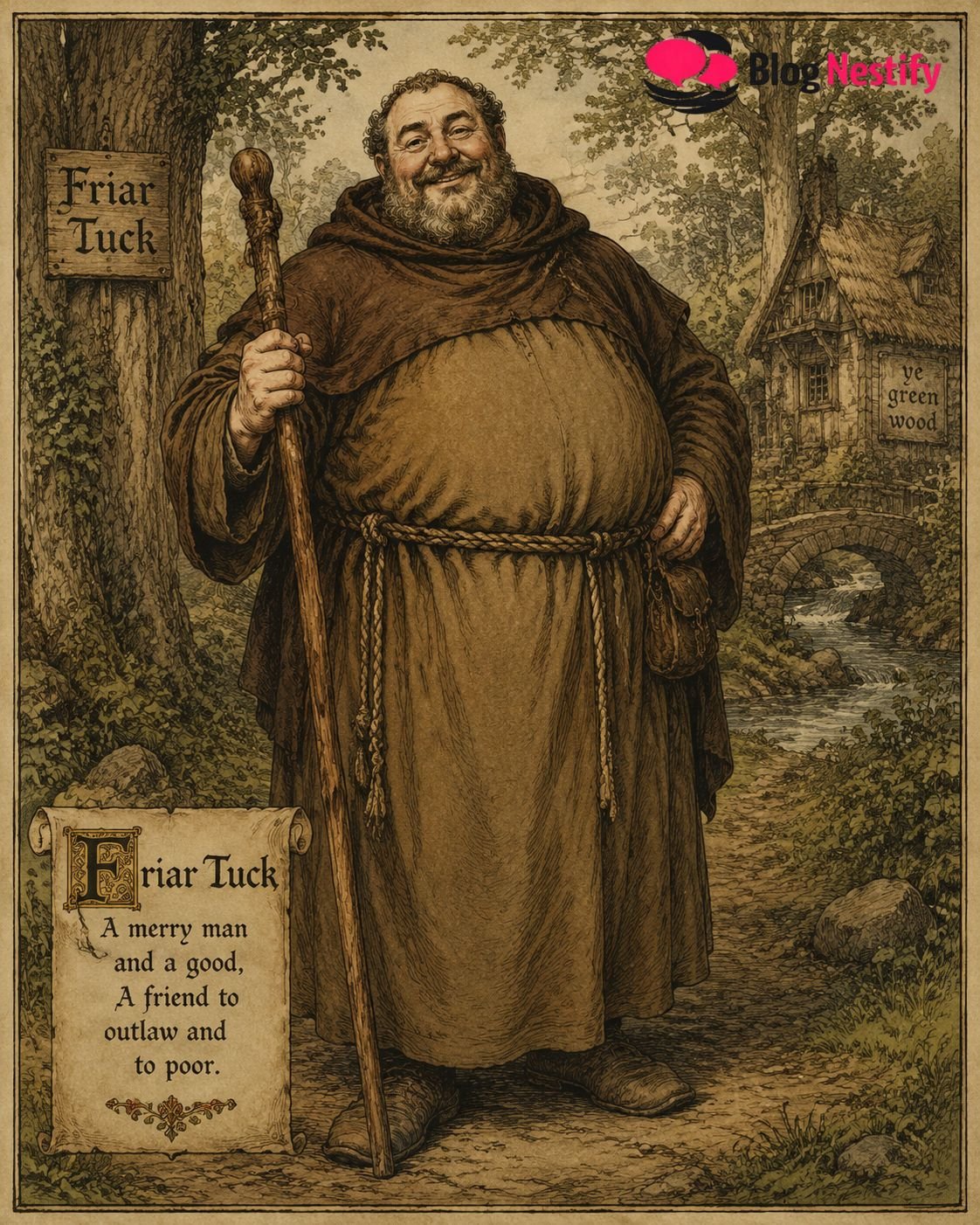
Friar Tuck is one of the most instantly recognizable figures in the Robin Hood legend. To many people, he’s the jolly, rotund monk who brings laughter to the tales with his hearty appetite and friendly banter. But to truly understand why Friar Tuck is more than just comedic background, we need to explore the character’s origins, symbolic significance, deeper narrative role, and lasting impact in literature and media.
Throughout the centuries, stories about Friar Tuck have evolved dramatically. What may have started as a folkloric figure tied to medieval festival traditions later transformed into one of the most enduring characters in the Robin Hood mythos. By looking beyond the light-hearted exterior, we uncover a character that embodies moral complexity, cultural symbolism, and narrative depth.
BIO
| Label | Information |
|---|---|
| Name | Friar Tuck |
| Role | Monk, ally of Robin Hood |
| First Appearance | Late 15th century |
| Origin | Medieval folklore |
| Symbol | Morality, wisdom, strength |
| Personality Traits | Jolly, wise, loyal, strong |
| Purpose in Story | Moral guide, protector of the poor, comic relief |
| Relationship with Robin | Loyal friend, spiritual advisor, and warrior |
| Key Skills | Archery, sword fighting, wisdom |
| Cultural Symbolism | Faith, justice, resistance to corruption |
| Famous Adaptations | “The Merry Adventures of Robin Hood,” films, TV shows |
| Notable Quote | “I may be a monk, but I’m no fool!” |
| Legacy | Enduring symbol of humor, strength, and morality |
A Character Born from Folk Tradition
Unlike Robin Hood himself, whose origins are tied directly to the earliest ballads of medieval England, Friar Tuck’s entry into the legend is unusual. He does not appear in the earliest surviving Robin Hood tales. Instead, his character emerges from May Games and morris dancing traditions in England and Scotland during the 15th through 17th centuries. These festivals often included symbolic characters, and figures resembling a jovial friar were common parts of this popular entertainment.
The first certain connection between Friar Tuck and Robin Hood is documented in a play from around 1475, where the two characters appear together on stage. This suggests that the association between the merry friar and the outlaw hero began as a performance tradition long before he became a staple of the written ballad tradition.
What this history shows is that Tuck didn’t originally serve as comic relief in Robin’s stories because of his personality traits. His role grew organically, shaped by performance and audience engagement over time, not by an author deliberately inserting a humorous side character. His jovial traits came from broader cultural traditions of merry folk figures.
More Than Entertainment: The Moral Voice
As scholars and literary historians have pointed out, Friar Tuck’s role goes deeper than mere mirth. In many stories, especially later adaptations, he serves as a moral compass for Robin Hood and his band. While Robin represents rebellion against injustice, Friar Tuck often represents moral grounding and spiritual justice.
Although early representations focused more on his humorous attributes his appetite, his battles of wit with Robin, and his affinity for drink later depictions emphasize his role as a cleric with convictions. In works like Howard Pyle’s The Merry Adventures of Robin Hood, Tuck is specifically sought out by Robin because a priest is needed to perform a marriage that defies corrupt authority. This positions him not merely as comic support, but as an agent of moral purpose in the narrative.
The character’s willingness to put his religious role into direct conflict with corrupt power reflects a deeper narrative purpose. Tuck is not just laughing and feasting; he is challenging corruption, defending the powerless, and using his spiritual authority to support the cause of justice.
A Champion of the Poor and Oppressed
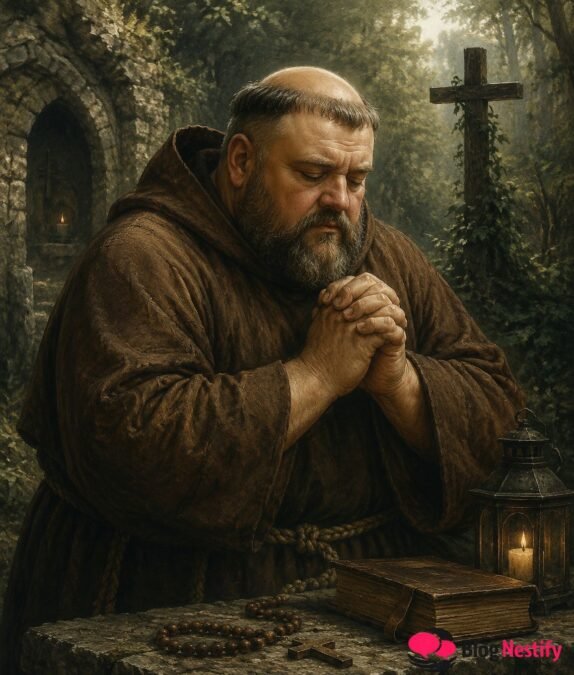
One reason Friar Tuck resonates with audiences is that his values align with the broader themes at the heart of the Robin Hood stories. Robin Hood is famous for robbing from the rich and giving to the poor, and Tuck serves as a bridge between the community and the Merry Men. His role often places him in contact with ordinary people villagers, peasants, widows, and the oppressed—so he becomes more than just a forest dweller.
In many adaptations, Tuck provides shelter, food, and moral reassurance to those suffering under unjust authority lines. Even when played for laughs, his laughter arises from joy in the simple things of life—a deep human quality that connects him to the common people. His presence among Robin’s band suggests that justice is not only fought with sword and arrow, but with compassion and community spirit.
Although the medieval context may differ from modern views of religious figures, the symbolic value of Friar Tuck as someone who advocates for the people remains consistent across versions.
Balance to Robin’s Rebellion
Robin Hood is often portrayed as a master archer and fierce opponent of corrupt leadership. He stands against the Sheriff of Nottingham and continues to defy authority whenever injustice arises. In narrative terms, Robin is a force of action. Friar Tuck, on the other hand, serves as a force of conscience.
Their relationship shows that rising against oppression doesn’t come only from anger or violence. A moral foundation, often expressed through faith or principle, gives deeper meaning to the outlaw band’s actions. Tuck’s faith-driven approach tempers Robin’s bravado, suggests strategy rooted in ethics, and gives voice to human dignity within the story.
Their interactions frequently begin with conflict and grow into respect and cooperation, highlighting that even characters who seem different at first cleric and rebel can find common ground in shared values.
Physicality and Strength in Storytelling
While modern audiences may remember Friar Tuck for his jovial appearance and quick wit, many early representations portray him as physically capable. Far from being weak or purely comic, Tuck is sometimes shown engaging in battles, wielding a sword, and even matching Robin in skill and courage. These portrayals emphasize that he is not a passive follower but an active participant in the narrative’s central conflicts.
This nuanced depiction where humor and strength coexist—is part of what makes his character enduring. Physical capability adds layers to Tuck’s role: he is not just wise and moral, but also competent in defending those values.
The dual nature of his character allows audiences to see him as both human and heroic—someone who laughs, eats, drinks, and fights for what is right. That complexity elevates him beyond a flat comic archetype.
Symbolism in the Robin Hood Mythos
Friar Tuck symbolizes several core themes in the Robin Hood legend:
- Resistance against corruption: As a religious figure who challenges corrupt authority, Tuck aligns faith with justice.
- Humanity in struggle: His laughter, appetite, and emotional warmth remind us that even in times of struggle, human bonds and joy are vital.
- Community over hierarchy: Tuck’s interactions with ordinary people emphasize collective well-being over rigid social order.
In many ways, he stands for the everyday person whose innate sense of right and wrong challenges the abuses of the powerful. His very presence in Robin’s band suggests that a successful struggle for justice must include moral clarity and communal support, not just daring deeds.
Adaptations Across Media
Over time, Friar Tuck’s character has been reimagined in countless adaptations—movies, novels, television series, and even cartoons. Some retellings lean into his comedic traits, while others explore his deeper moral and narrative significance.
For example, classic films sometimes highlight his warmth and humor, while television adaptations often flesh out his role as a spiritual guide and moral adviser. Animated works—even caricatures—retain his core traits of loyalty and heart, showing his lasting appeal across audiences of all ages.
This flexibility shows that Friar Tuck’s value isn’t limited to a single function. He can make audiences laugh, make characters think, and make entire stories richer through his presence. That versatility is a testament to the depth that folklore and storytelling can achieve through well-crafted characters.
The Legacy of Friar Tuck
So why does Friar Tuck endure?
Part of his power lies in the balance he brings to the legend. He combines humor with wisdom, faith with rebellion, and humanity with heroism. He reminds us that resistance to injustice isn’t just about action; it’s about heart, conscience, and connection to the people we fight for.
He challenges us to see that laughter and strength are not opposites, nor are faith and defiance. In a world that often looks for neat character types, Friar Tuck stands out precisely because he is complex, relatable, and deeply human.
When we look beyond the laughter, we see a figure who embodies moral courage and grounded compassion. That is why Friar Tuck is much more than a comic relief in the Robin Hood legend he is an essential piece of the moral and emotional core that makes these stories resonate through the centuries.
FAQs
1. Who is Friar Tuck in the Robin Hood legend?
Friar Tuck is a jovial monk and one of Robin Hood’s most loyal allies. Initially appearing in medieval folklore, he serves as a spiritual guide, moral compass, and a comic figure who also provides wisdom and strength to the outlaw band.
2. Why is Friar Tuck more than just comic relief?
While his character is often humorous, Friar Tuck’s deeper role as a voice of morality, compassion, and resistance to corruption elevates him beyond a simple comic figure in the Robin Hood legend.
3. How does Friar Tuck contribute to Robin Hood’s cause?
Friar Tuck plays a crucial role in supporting Robin Hood’s fight for justice. He serves as a symbol of righteousness, helping to provide spiritual guidance, support to the poor, and strength during conflicts.
4. What makes Friar Tuck a unique character in the Robin Hood stories?
Friar Tuck’s blend of humor, wisdom, physical strength, and devotion to justice sets him apart. His complexity as both a jovial monk and a courageous hero adds depth to the narrative, making him an unforgettable character.
5. How has Friar Tuck been portrayed in modern adaptations?
In modern adaptations of Robin Hood, Friar Tuck’s character is often updated, but his essence remains the same. He still brings humor, moral clarity, and physical strength, while his spiritual influence continues to shape the story.
