

Introduction
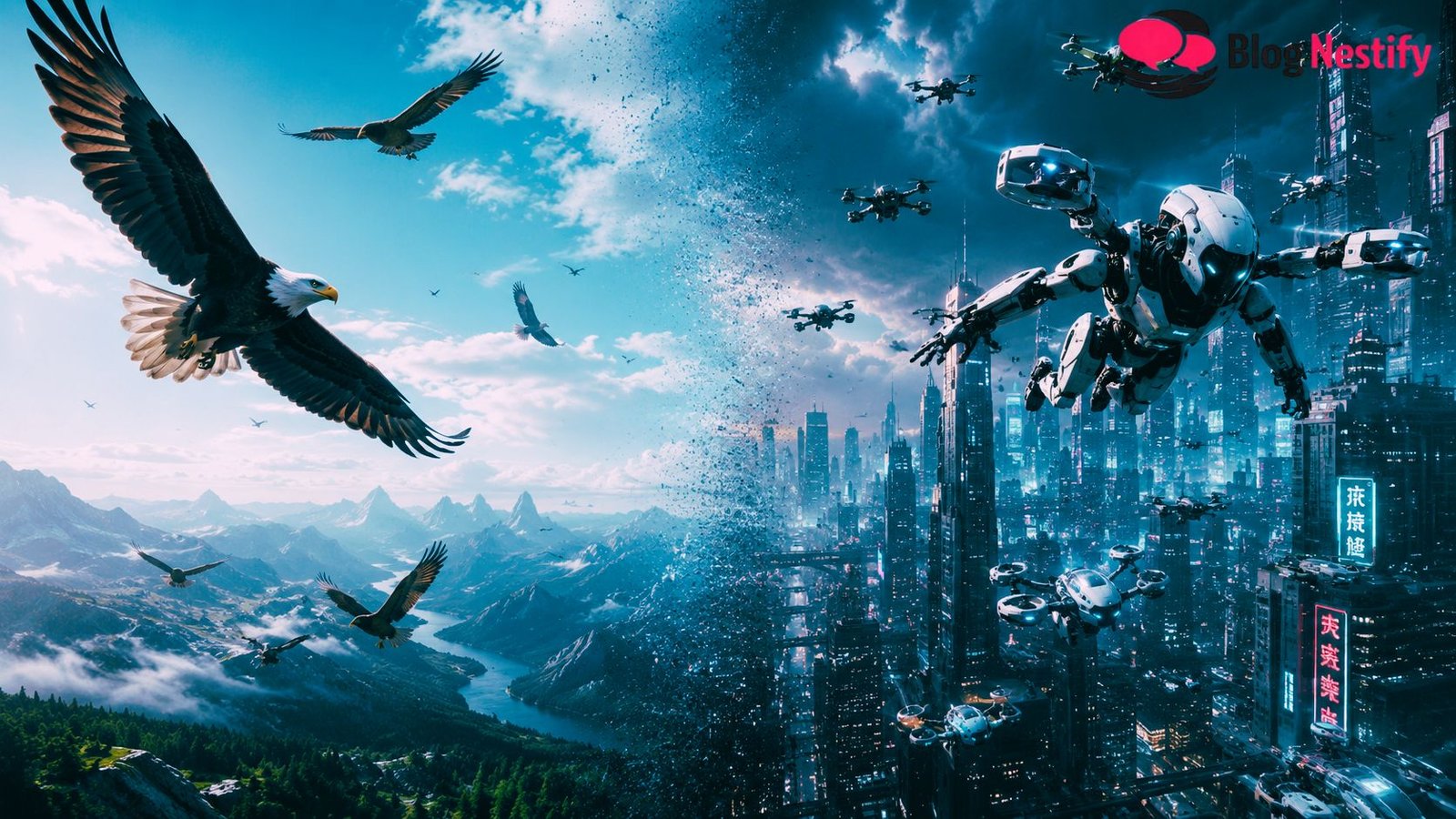
For centuries, birds have symbolized freedom, intelligence, survival, and adaptation. Long before modern technology existed, humans studied birds to understand the mechanics of flight and movement. Today, robots are becoming one of the most powerful tools shaping industries, communication, healthcare, transportation, and even warfare. As artificial intelligence and robotics continue to evolve rapidly, an interesting question emerges: which will shape the future faster?
At first glance, the comparison may seem unusual. Birds are natural living creatures that evolved over millions of years, while robots are machines created by humans. Yet both influence the future in surprisingly connected ways. Birds inspire engineers, scientists, and robotic designers, while robots are beginning to imitate nature in ways once thought impossible.
The future may not simply belong to technology alone. It may belong to technology that learns from nature.
BIO
| Label | Information |
|---|---|
| Topic | Birds vs Robots |
| Article Type | Technology and Nature Comparison |
| Main Focus | Future impact of birds and robots |
| Keyword | birds vs robots |
| Category | Science and Technology |
| Purpose | Explore future innovation trends |
| Nature Role | Ecosystem balance and inspiration |
| Robot Role | Automation and AI advancement |
| Key Technology | Bird-inspired robotics |
| Main Advantage of Birds | Natural adaptation |
| Main Advantage of Robots | Speed and efficiency |
| Future Prediction | Nature and technology may coexist |
| Reader Benefit | Better understanding of AI and nature |
Birds vs Robots: Which Will Shape the Future Faster?
The Natural Power of Birds
Birds play a far greater role in the world than many people realize. They help maintain ecosystems, control insect populations, spread seeds, and support environmental balance. Without birds, many natural systems would struggle to survive.
Scientists also consider birds important environmental indicators. Changes in bird migration, breeding patterns, and population numbers often reveal early signs of climate change or ecosystem damage. Research from the Cornell Lab of Ornithology has shown how bird data combined with artificial intelligence helps researchers better understand environmental shifts and conservation needs.
Birds are masters of efficiency. Their bodies are designed for survival with lightweight bone structures, aerodynamic wings, and energy-saving flight systems. Some species travel thousands of miles during migration while using remarkably little energy. Engineers continue studying these abilities because modern aircraft and drones still cannot fully match the efficiency of bird flight.
Beyond biology, birds have also shaped human imagination for generations. From ancient myths to modern aviation, they remain one of nature’s greatest inspirations.
How Birds Inspired Modern Robotics
One of the most fascinating parts of the birds vs robots discussion is how heavily robotics depends on nature itself. Many robotic systems are built using the concept of biomimicry, which means learning from natural systems to solve human engineering problems.
Modern drones, surveillance systems, and flying robots often imitate bird movement, wing structures, and landing behaviors. Engineers study how birds glide, perch, turn, and stabilize themselves in difficult conditions. These lessons help create more efficient and flexible robotic systems.
Stanford researchers developed a bird-inspired robot capable of landing and grasping branches like real birds. The machine uses claw mechanisms and balancing systems modeled after bird anatomy.
Researchers are also building robotic birds for wildlife conservation and environmental monitoring. Some robots mimic bird appearance and behavior closely enough to study animals in natural environments without causing major disturbance.
This relationship shows an important truth: robots may be advancing quickly, but much of their progress still comes from observing nature.
The Rapid Rise of Robots
While birds evolved naturally over millions of years, robots are improving at extraordinary speed within just decades. Artificial intelligence, automation, and machine learning are transforming nearly every major industry.
Factories now use robotic systems for manufacturing precision. Hospitals rely on robots for surgeries and medical support. Warehouses use automated machines for sorting and delivery. Self-driving technology is reshaping transportation, while AI-powered systems increasingly influence finance, education, and communication.
Unlike birds, robots do not need rest, food, or sleep. They can work continuously, analyze huge amounts of data, and perform dangerous tasks in risky environments. This gives robotics a major advantage in speed and productivity.
Recent advancements in AI-driven drones also demonstrate how robotics is expanding into environmental research, wildlife monitoring, and disaster response. Scientists now use intelligent drones to track animals, detect poaching activity, and monitor habitats in remote areas.
The robotics industry continues growing because businesses and governments see automation as a way to improve efficiency and reduce operational costs.
Natural Intelligence vs Artificial Intelligence
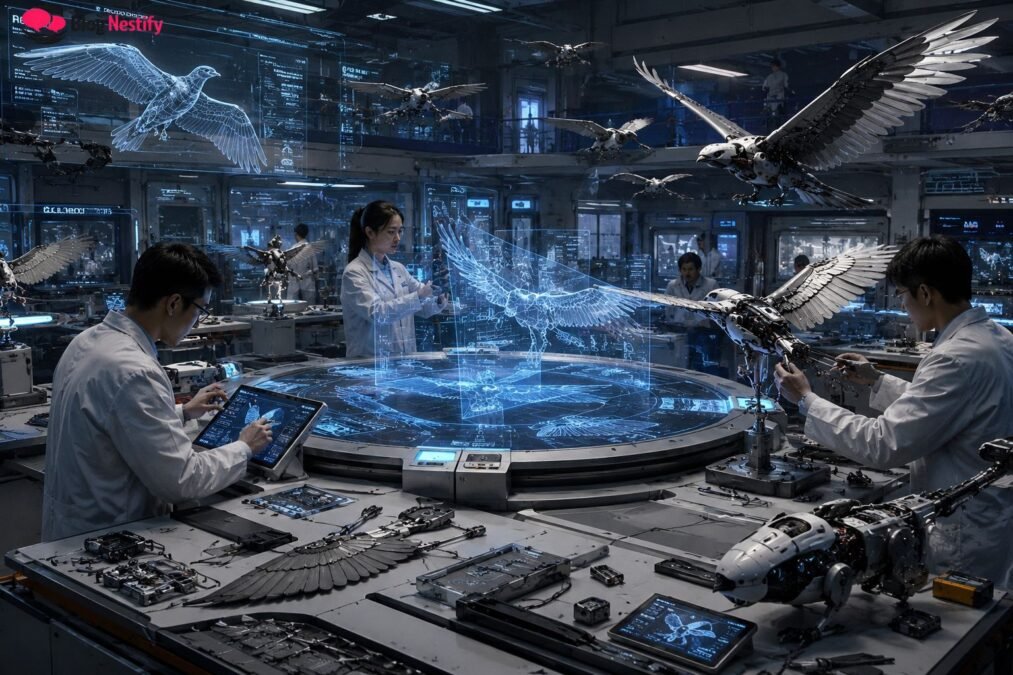
The biggest difference in the birds vs robots debate comes down to intelligence.
Birds operate through natural intelligence developed through evolution. Their survival instincts allow them to adapt to weather changes, migration routes, predators, and environmental conditions without needing software updates or programming.
Many bird species display remarkable cognitive abilities. Ravens and parrots can solve problems, recognize patterns, and even use tools. Some birds communicate through complex sounds and social behaviors that scientists still do not fully understand.
Robots, however, rely on artificial intelligence. AI systems process information using algorithms, data analysis, and machine learning. Unlike biological intelligence, robotic intelligence improves mainly through programming and computational learning.
Artificial intelligence can outperform humans and animals in certain areas such as calculations, pattern recognition, and data processing. Yet robots still struggle with emotional understanding, instinctive adaptability, and the flexible decision-making found in nature.
This creates an interesting contrast. Birds represent natural intelligence refined by evolution, while robots represent intelligence created by human engineering.
Energy Efficiency and Sustainability
Birds remain unmatched in energy efficiency. Their flight systems are optimized naturally for long-distance travel and survival. Many species use wind currents and aerodynamic techniques to conserve energy during migration.
Robots, on the other hand, depend heavily on batteries, electricity, charging infrastructure, and manufactured materials. Advanced drones and robotic systems often face limitations related to battery life and energy consumption.
Researchers are trying to solve this challenge by studying birds more closely. Bird-inspired drones now include designs that improve maneuverability and reduce power usage through flapping wings and adaptive movement systems.
One bird-inspired robotic project known as SNAG was specifically designed to perch on branches instead of hovering continuously. This reduces battery consumption and extends operational time.
The comparison highlights a major lesson for future robotics: nature already solved many engineering problems long ago.
Can Robots Replace Nature?
Some technologists believe robots will eventually replace many natural systems. Robotic pollinators, automated agriculture, and AI-controlled ecosystems are often discussed as future possibilities.
However, replacing nature is far more difficult than replacing simple human labor.
Real ecosystems involve millions of interconnected relationships between plants, animals, insects, bacteria, climate, and geography. Birds are part of these highly complex systems. Removing them completely would create unpredictable consequences.
The idea of robotic pollinators, for example, has received criticism from environmental researchers. Experts argue that robotic substitutes cannot realistically replace the ecological role of natural pollinators and biodiversity.
Nature is self-healing, adaptive, and interconnected in ways machines still cannot fully replicate.
Robots can assist conservation and environmental management, but they cannot completely replace living ecosystems.
How Robotics Could Shape the Future Faster
Despite the limitations, robots are undeniably shaping the modern world at incredible speed.
Artificial intelligence systems improve every year. Autonomous vehicles, smart factories, robotic healthcare systems, and AI assistants are already integrated into daily life. Businesses invest billions into automation because machines can increase productivity rapidly.
In the short term, robotics will likely influence society faster than birds simply because technology develops at accelerated speed. Governments, corporations, and research institutions actively push innovation in robotics and AI.
Birds influence the future more indirectly. Their role is connected to sustainability, environmental balance, and scientific inspiration rather than industrial transformation.
However, fast influence does not always mean deeper influence.
Birds continue supporting ecosystems that humans and technology ultimately depend upon. Without functioning natural systems, technological progress alone cannot sustain civilization.
The Future of Bird-Inspired Robotics
The most realistic future may not involve birds competing against robots. Instead, the future likely belongs to robotics inspired by birds.
Researchers around the world are creating flying robots capable of gliding, hopping, perching, and maneuvering like birds. Projects such as RAVEN and other bird-inspired drones demonstrate how engineers increasingly depend on biological models for innovation.
Scientists are also exploring robotic systems for conservation purposes. Some robots help monitor endangered species, collect environmental data, or safely study wildlife behavior without major human interference.
Even military and aerospace industries are adopting bird-inspired technologies because natural flight systems offer flexibility and efficiency beyond conventional machines.
Biomimicry is becoming one of the most important trends in engineering because it combines natural wisdom with technological advancement.
Ethical Questions About Robotics
As robotics grows more powerful, ethical concerns continue increasing.
Automation may replace human jobs across industries. AI surveillance systems raise privacy concerns. Military drones and autonomous weapons create debates about safety and control.
There are also environmental concerns connected to robotics production, including electronic waste, mining for battery materials, and energy consumption.
Birds, despite being natural creatures, face threats from urbanization, pollution, habitat destruction, and climate change. Ironically, some of these environmental problems are linked to industrial and technological expansion.
The birds vs robots discussion therefore becomes larger than technology itself. It becomes a conversation about balance between innovation and sustainability.
Humanity must decide whether technology will work alongside nature or gradually damage the ecosystems supporting life.
Which Will Truly Shape the Future?
If the question focuses on speed, robots are clearly advancing faster. Artificial intelligence and robotics continue transforming industries within years rather than centuries.
But if the question focuses on long-term survival and sustainability, birds and nature may ultimately matter more.
Birds represent billions of years of evolutionary intelligence. They maintain ecosystems, inspire engineering breakthroughs, and remind humanity that nature remains the greatest designer on Earth.
Robots represent human ambition, creativity, and technological progress. They expand capabilities, improve efficiency, and solve problems beyond natural limitations.
The future is unlikely to belong entirely to one side.
Instead, the strongest future may emerge from combining the intelligence of nature with the power of technology.
Conclusion
The debate around birds vs robots reveals more than a simple comparison between nature and machines. It highlights two powerful forces shaping human civilization in different ways.
Birds continue supporting ecosystems, inspiring innovation, and teaching scientists valuable lessons about efficiency, adaptability, and survival. Robots continue accelerating industries, transforming economies, and redefining what technology can achieve.
Robotics may shape the near future faster, but nature still shapes the foundation of life itself.
The most promising future is not one where robots replace birds. It is one where humans build smarter technology by respecting and learning from the natural world.
