

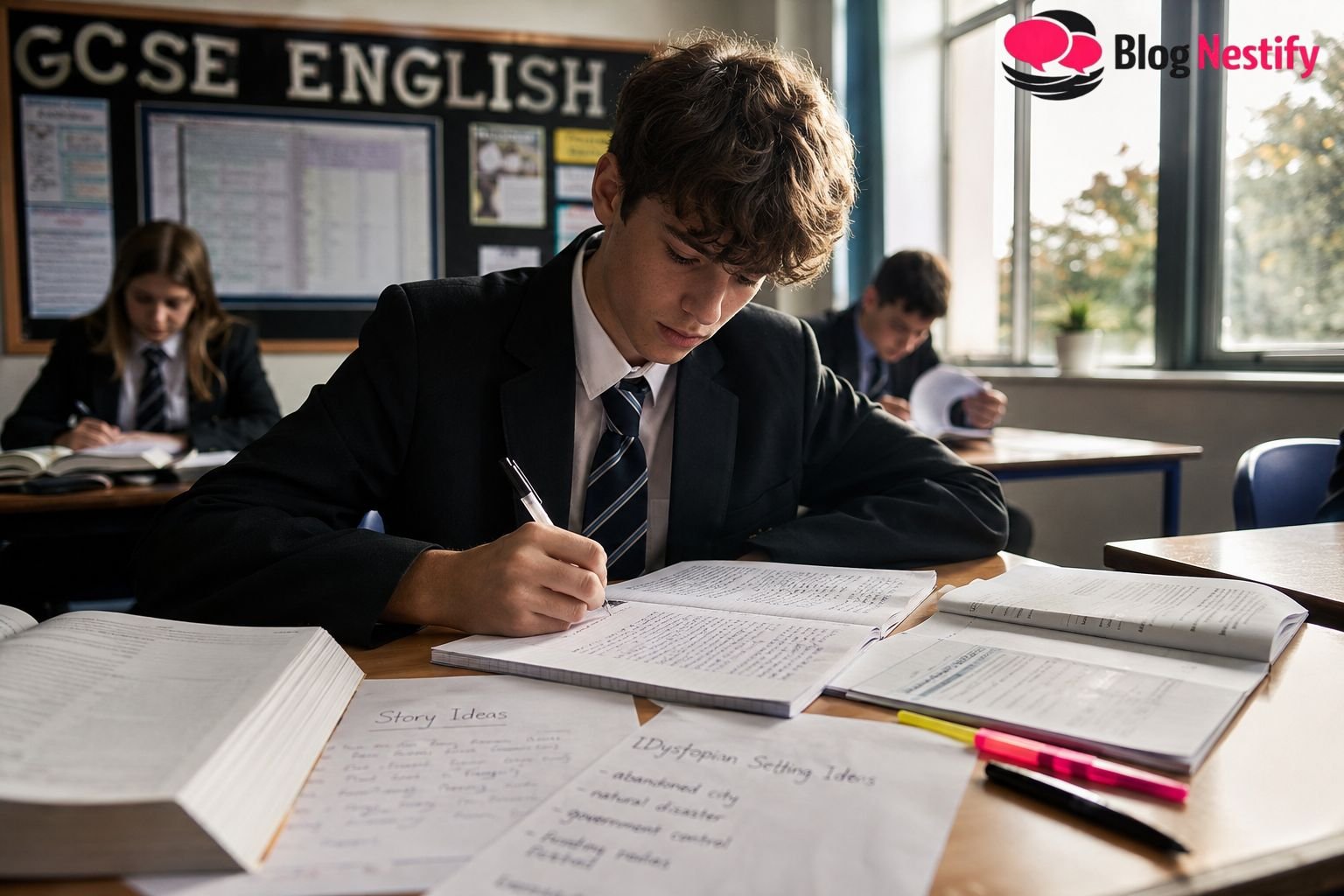
GCSE creative writing can feel difficult when you are staring at a blank page and trying to think of a story under exam pressure. Many students know they need strong vocabulary, clear structure, and interesting ideas, but they are not always sure what that looks like in a real story.
That is why studying gcse english story examples can be so useful. Good examples show you how a story begins, how tension is built, how characters are developed, and how an ending can leave a strong impression. They also help you understand what examiners often reward: control, clarity, imagination, accurate writing, and a confident sense of purpose.
In this guide, you will find practical story ideas, writing techniques, and examples that can help you improve your own GCSE English creative writing.
BIO
| Label | Information |
|---|---|
| Article Topic | GCSE English Story Examples |
| Content Type | Educational Blog Post |
| Main Purpose | Improve creative writing skills |
| Target Audience | GCSE English students |
| Writing Focus | Creative storytelling |
| Common Themes | Mystery, fear, friendship, change |
| Key Skill | Descriptive writing |
| Story Structure | Beginning, middle, ending |
| Best Writing Style | Clear and emotional |
| Important Technique | Show, don’t tell |
| Exam Benefit | Better creative writing marks |
| Recommended Practice | Read and write story examples |
What Makes a Strong GCSE Story?
A strong GCSE story does not need a complicated plot. In fact, simple stories often work better because they are easier to control in a short exam response. A story about a storm, a lost letter, a strange sound at night, or a difficult journey can be powerful if it is written with detail and emotion.
The best stories usually have a clear beginning, middle, and ending. The opening should pull the reader in quickly. The middle should create tension or conflict. The ending should feel complete, even if it is thoughtful, emotional, or slightly mysterious.
Good GCSE writing also uses language carefully. This means using sensory description, varied sentence lengths, strong verbs, and accurate punctuation. The aim is not to use the longest words possible. The aim is to make every sentence feel purposeful.
Example 1: The Stormy Night Escape
A storm story is one of the most effective gcse english story examples because it naturally creates tension. Bad weather can reflect fear, danger, or confusion. This technique is called pathetic fallacy, where the weather mirrors the mood of the scene.
A student might begin with a character trapped inside an old house during a storm. The lights flicker. Rain lashes against the windows. Somewhere upstairs, a floorboard creaks. The character knows they should leave, but the front door is jammed.
This type of story works because it immediately creates atmosphere. The reader wants to know what the character is afraid of and whether they will escape. Short sentences can increase suspense. Longer descriptive sentences can slow the moment down and make the fear feel more intense.
Example opening idea:
The wind screamed through the broken window, carrying the smell of rain and dust into the hallway. Mia stood frozen, her hand still gripping the cold brass handle. Behind her, something moved.
This opening is simple, but it works because it raises questions. What is behind her? Why is she there? What will she do next?
Example 2: The Forgotten Letter
A forgotten letter story is perfect for students who want to write something emotional rather than frightening. It can explore family secrets, regret, memory, or forgiveness.
The story could begin with a character cleaning out an old drawer and discovering a letter that was never sent. The handwriting is familiar. The date is years old. As the character reads it, they discover something that changes how they see a family member.
This kind of story gives you a chance to show emotion in a controlled way. Instead of saying “she was sad,” you can describe her hands shaking, her breathing slowing, or her eyes moving back over the same sentence again and again.
The best part of this idea is that it does not need dramatic action. The tension comes from discovery. The reader keeps reading because they want to know what the letter says and why it was hidden.
Example 3: The Last Train Home
A train story is a strong choice because the setting is easy to picture. Stations, empty platforms, yellow lights, and distant announcements can create a lonely or mysterious atmosphere.
In this story, a character might miss their usual train and catch the last one home. The carriage is almost empty. Across from them sits a stranger who seems familiar. As the journey continues, the character notices small details that make them uneasy.
This story could become mysterious, emotional, or even hopeful. Perhaps the stranger reminds the character of someone they lost. Perhaps the journey helps them make an important decision. Perhaps the train becomes a symbol of moving on.
This is one of the more flexible gcse english story examples because it allows you to combine setting, character, and theme without needing too many events.
Example 4: Trapped Inside the School
A school setting is relatable for GCSE students, which makes it easier to write naturally. A story about being trapped inside school after everyone has left can create suspense without needing an unrealistic plot.
The character might stay behind to collect a forgotten book. When they try to leave, the corridors are dark and the doors are locked. Their phone has no signal. Somewhere in the building, they hear footsteps.
This idea works well because the familiar setting becomes unfamiliar. A normal school corridor can feel frightening when it is empty and silent. Describing ordinary objects in unusual ways can make the story more atmospheric.
For example, lockers can look like “rows of metal faces.” A classroom clock can sound too loud. A flickering light can make the corridor seem longer than it really is.
Example 5: A Day That Changed Everything
Not every GCSE story needs mystery or fear. A personal story about change can be just as effective. This type of writing often focuses on one important moment in a character’s life.
The story might be about losing a friendship, standing up for someone, moving house, winning a competition, or making a difficult choice. The key is to focus on emotion and development.
A good structure for this story is to begin just before the important event, build up to the moment of change, and end with the character reflecting on what they have learned.
This style is useful because it feels human. Examiners often appreciate writing that shows emotional maturity, especially when the story feels believable and controlled.
How to Start a GCSE Story
The opening of your story is very important. You do not have much time to impress the reader, so avoid beginning with too much background information.
Instead of writing, “My name is Jack and I am fifteen years old,” start in the middle of a moment.
You could begin with action:
The door slammed before I had the chance to speak.
You could begin with description:
Fog pressed against the windows like a hand trying to get in.
You could begin with dialogue:
“You weren’t supposed to find that,” Mum whispered.
You could begin with a thought:
I knew I had made a mistake the second the room went silent.
Each of these openings creates curiosity. The reader wants to continue because something is already happening.
How to Build Tension
Tension is what keeps a story interesting. It does not always mean danger. Tension can come from fear, secrets, arguments, uncertainty, guilt, or pressure.
One effective method is to delay information. Do not explain everything at once. Let the reader notice details gradually. For example, instead of immediately saying there is someone in the house, describe a sound, a shadow, or a door that was open before but is now closed.
Sentence length also matters. Short sentences create urgency. Longer sentences can build atmosphere.
For example:
The handle turned. Slowly.
That feels tense because the short structure forces the reader to pause.
A longer sentence might create mood:
Outside, the rain blurred the streetlights until they looked like dying stars, pale and distant behind the glass.
Both styles are useful. The best writing often uses a mixture.
How to Create Better Characters
A GCSE story does not need many characters. One or two strong characters are usually enough. Too many people can make the story confusing and difficult to finish.
To make a character believable, give them a clear feeling or problem. They might be scared, guilty, lonely, angry, hopeful, or determined. Their emotions should affect what they do.
For example, a nervous character may avoid eye contact. An angry character may speak in short sentences. A guilty character may notice small details because they are overthinking everything.
You can also reveal character through action. Instead of saying “Tom was kind,” show him giving his coat to someone in the rain. Instead of saying “Amira was brave,” show her walking back into the dark corridor even though she is afraid.
How to Use Description Well
Description is important in GCSE creative writing, but too much description can slow the story down. The best description helps the reader feel the scene while still moving the story forward.
Focus on the five senses: sight, sound, smell, touch, and taste. You do not need to use all five every time, but adding one or two can make the writing feel more vivid.
For example, instead of writing:
The room was old.
You could write:
The room smelt of damp paper and cold ash. Dust gathered in the corners like grey snow.
This version gives the reader a clearer image. It also creates mood.
Try to choose details that match the atmosphere. In a sad story, you might describe faded colours, quiet rooms, or weak light. In a tense story, you might describe sharp sounds, shadows, or uncomfortable heat.
How to End a GCSE Story
A strong ending does not have to explain everything. It should feel satisfying, but it can still leave the reader thinking.
There are several ways to end a GCSE story. You can end with a twist, a moment of realisation, a repeated image from the beginning, or a quiet emotional line.
For example, if your story begins with a character finding an old letter, it could end with them finally posting a reply. If your story begins with a storm, it could end with sunlight breaking through the clouds. This creates a sense of structure and meaning.
Avoid endings such as “it was all a dream” unless you can make them feel original. Examiners have seen that type of ending many times, so it often feels rushed.
Common Mistakes to Avoid
One common mistake is making the plot too big. Car chases, murders, explosions, and dramatic disasters can be hard to write convincingly in a short exam answer. Smaller stories often have more emotional power.
Another mistake is using complicated vocabulary incorrectly. Ambitious vocabulary is useful, but only when it fits naturally. Clear writing is better than forced writing.
Students also sometimes forget paragraphing. Paragraphs help control pace and make the story easier to read. A new paragraph can show a change in time, place, action, or focus.
Weak punctuation can also reduce the impact of good ideas. Full stops, commas, speech marks, and apostrophes should be used carefully. Technical accuracy matters because it helps the reader trust the writing.
GCSE Story Ideas to Practise
Here are some useful story ideas you can practise before the exam:
A character receives a message meant for someone else.
A student finds something strange in an empty classroom.
Someone returns to a place they promised never to visit again.
A family secret is revealed during a storm.
A character has only ten minutes to make an important decision.
A lost item brings back a powerful memory.
A quiet train journey becomes unforgettable.
A character hears their name called in an empty street.
Each idea can be written in many different ways. The best approach is to keep the plot focused and spend time developing atmosphere, emotion, and character.
Why Examples Help You Improve
Reading gcse english story examples helps because it gives you models to learn from. You begin to notice how stories are shaped, how openings create interest, and how endings leave an impact.
However, examples should not be copied word for word. Instead, use them to understand technique. Look at how a writer describes setting, builds tension, introduces a character, or changes sentence length.
A useful practice method is to take one example and rewrite it in your own style. Change the setting, character, or mood. This helps you build confidence while still learning from a strong structure.
Final Thoughts
The best GCSE creative writing is not about showing off. It is about writing with control, imagination, and purpose. A simple idea can become powerful when it has a strong opening, clear structure, vivid description, believable emotion, and an effective ending.
Using gcse english story examples is one of the best ways to improve because examples show you what good writing looks like in practice. Whether you choose a stormy escape, a forgotten letter, a lonely train journey, or a life-changing moment, focus on making the reader feel something.
A good GCSE story does not need to be perfect. It needs to be clear, thoughtful, and carefully written. With regular practice, you can learn how to create stories that feel confident, engaging, and exam-ready.
FAQs
What are the best GCSE English story examples?
The best GCSE English story examples are usually simple, emotional, and well-structured. Stories about mystery, fear, personal growth, or unexpected discoveries often work well in exams.
How long should a GCSE creative writing story be?
Most GCSE creative writing responses are around 500 to 700 words in exam conditions. Quality matters more than length, so focus on clear structure and strong description.
What do examiners look for in GCSE creative writing?
Examiners look for imagination, clear organisation, strong vocabulary, accurate punctuation, and emotional impact. A focused story with good control usually scores higher.
How can I improve my GCSE story writing skills?
Reading gcse english story examples, practising timed writing, and learning descriptive techniques can help improve your storytelling and confidence in exams.
Which themes are best for GCSE creative writing?
Themes like fear, mystery, friendship, regret, survival, and change are popular because they allow students to create emotion and tension naturally.
