

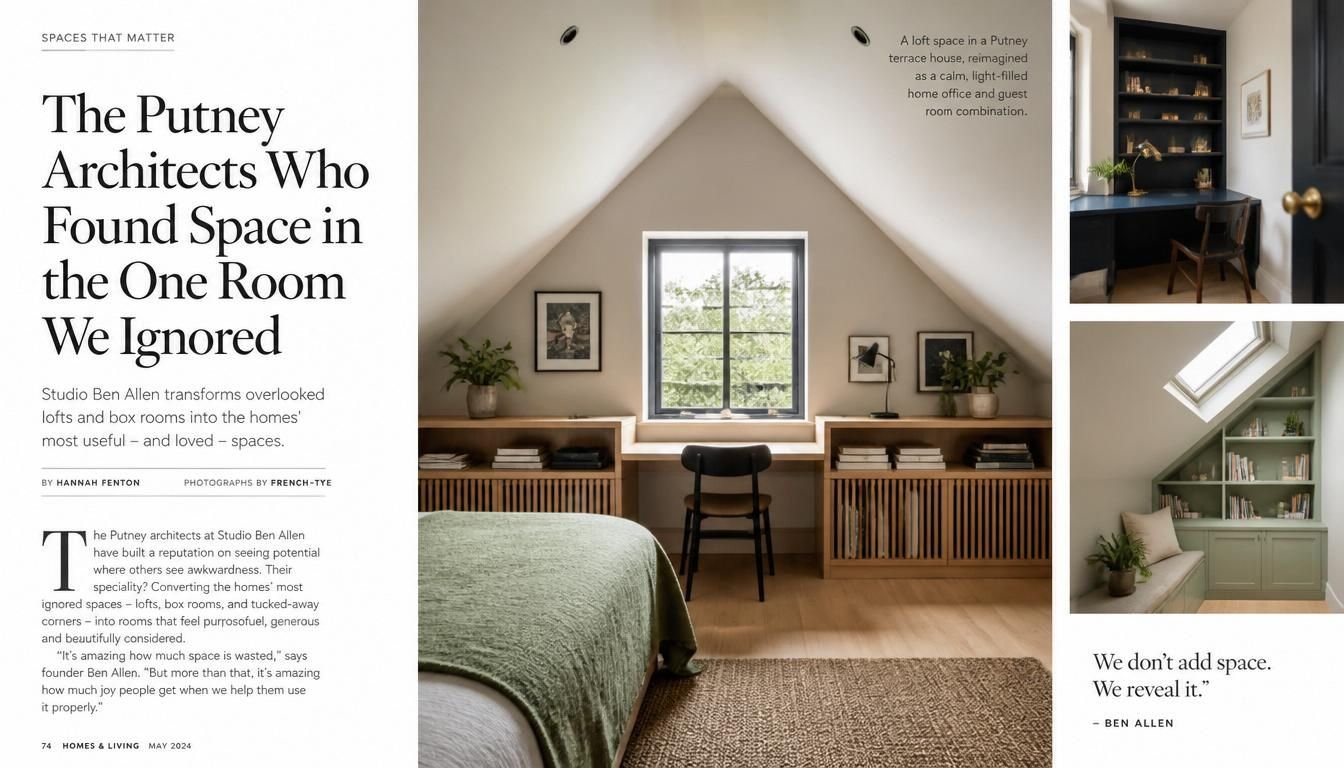
We had walked past it every day for years without thinking. A small, awkward room at the side of the house that had become a dumping ground. When the hired architects in Putney, London, walked in, that forgotten room was the first place they stopped. The space we wanted, they said, was already here. We just weren’t using it.
I had assumed more space meant building an extension. Adding square footage onto the back, the usual answer. The architect saw it differently. Before adding anything, they wanted to know why we weren’t using the space we already had.
That awkward side room, the cramped hallway, the badly arranged ground floor. The architect saw potential where we saw problems we had stopped noticing. Sometimes, they explained, the cheapest space is the room you already own but waste.
Why We Stopped Seeing the Room
The room had become invisible through habit. It was too small to be a proper bedroom, oddly shaped, badly lit. So over the years it filled with the stuff that has nowhere else to go. Boxes, old furniture, the exercise bike.
We had mentally written it off. It wasn’t a room anymore in our heads, just storage. We walked past it dozens of times a day without ever asking what it could be.
The architect hadn’t lived with that blindness. She saw a room with potential being wasted, and asked the obvious question we had stopped asking. What if this actually worked.
What the Architect Saw Instead
She looked at how the awkward room connected to the spaces around it. Knock through here, open up there, and suddenly the dead room became part of a flowing, usable ground floor.
The poor light could be fixed with a rooflight. The awkward shape could work once the walls around it changed. The room that served no purpose could become the link that made the whole floor make sense.
None of this meant a big extension. It meant rethinking what was already there. The space we wanted to build was hiding in the space we already had, just trapped behind walls and habit.
Why Reworking Beat Extending
The architect explained the logic. Extending costs a lot per square metre. Foundations, walls, roof, planning. Reworking existing space costs far less, because the shell already exists.
For us, opening up and reusing the wasted room gave most of what an extension would have, for a fraction of the cost and disruption. No digging, no planning battle, no months of mess.
It wasn’t always the answer, she was clear about that. Sometimes you genuinely need to extend. But it is always worth checking whether the space you want is already there before you pay to build more. For us, it was.
How Putney Homes Hide This Potential
Putney is full of period terraces and houses with these awkward, underused spaces. Side rooms, returns, badly arranged ground floors that trap potential behind old layouts.
A local architect who knows these homes spots it fast. They have seen the same wasted spaces again and again and know how to unlock them. The practice we used had worked on plenty of homes near ours.
We were so focused on what we lacked that we missed what we had. It took someone who reads Putney houses for a living to point at the obvious thing we had been ignoring for years.
The Light and Flow It Unlocked
Once the wasted room was opened into the spaces around it, the whole ground floor changed. Light moved through where it had been blocked. The flow from front to back finally made sense.
The cramped, chopped up feeling disappeared. We hadn’t added much footprint at all, yet the house felt dramatically bigger, because we were finally using all of it properly.
That is the thing about wasted space. Reclaiming it can transform a home as much as extending, sometimes more, because it fixes the flow rather than just bolting on more area.
What to Look For in Your Own Home
Before you assume you need to extend, look hard at the space you already have. Is there a room you have stopped using properly. An awkward layout trapping potential. A dumping ground that could be something.
Ask an architect to assess what reworking could achieve before you commit to building. The cheapest extra space is often the space you already own. A good and experienced london architect who knows period homes will spot it quickly.
Six to eight months from that ignored room to a ground floor that finally works, with barely any new footprint added. We thought we needed to build. The architect found our space hiding in the room we had forgotten. Look at what you already have before you pay for more.
